“black leaf” search results (300)

Learn more about coffee growing.
Buddha said, a flower a world, a leaf a bodhi. Instead of a coffee bean, I still look at this pure black liquid. After a year of growth, it has gone through harvesting, production, roasting, grinding, extraction, and finally condensed into that mellow taste. It's like everything that's been polished by time and hands, like wine, like jade, in a tiny void.
2014-10-17 Coffee knowledge Fine coffee learning Coffee growing
Honduras New Deal to reduce the size of coffee producing areas boutique coffee beans
Everything happens for a reason, the berries believe. What you sow, you reap. Because it is now; it is the future. And we can't predict what the future results will be, so grasp the "cause" of your own species, cherish what you have in front of you, and if you want to change, there will be different results. So don't forget the original heart, stick to yourself. After all, whether the "fruit" is good or bad, the process of heart is worthy of praise.
2016-05-05 Honduras New Deal Coffee Region Size Reduction Fine Coffee Bean
The basic knowledge of Coffee beans Coffee beans are the three native species of coffee
Coffee belongs to the evergreen shrub of the genus Rubiaceae, which is centered in the tropics. There are about 6000 species of Rubiaceae belonging to 500 genera. Coffee has always been thought to have certain effects, such as strengthening the stomach, waking up the brain, stopping bleeding, dissipating heat, strengthening the body, and so on. The more famous Rubiaceae plant is Gardenia jasminoides, whose fruit was dried and used as medicinal material a long time ago. The three native species of coffee
2015-04-13 Coffee beans basic knowledge coffee three native belong to grass family evergreen
How many coffee producing countries are there in the world?
1. Arabica species (scientific name Coffea arabica) Arabica species is native to Ethiopia's Abyssinian plateau (now Ethiopia plateau), early mainly as a medicinal food (Islamic lovers used as a healing medicine or to wake up), 13th century developed the habit of baking and drinking, 16th century introduced to Europe via Arabia
2016-06-06 coffee cultivation condition world on how much country of production rabbi kasu scientific name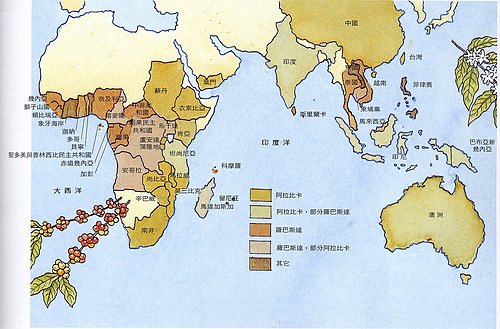
The basic knowledge of Coffee beans the three native species of coffee Robsta species Arabica species Libby
Basic knowledge of coffee beans (1) Coffee belongs to the evergreen shrub of the genus Rubiaceae, which is centered in the tropics. There are about 6000 species of Rubiaceae belonging to 500 genera. Coffee has always been thought to have certain effects, such as strengthening the stomach, waking up the brain, stopping bleeding, dissipating heat, strengthening the body, and so on. The more famous Rubiaceae plant is Gardenia jasminoides, whose fruit was dried and used as medicine a long time ago.
2016-03-17 Coffee beans Basics Coffee Native Robes Booth Rabbi Card seed Libby
Black coffee fat loss 7 major features
● Black coffee fat loss 7 features 1, appetizing staple food: caffeine will stimulate sympathetic nerves, stimulate gastrointestinal secretion of gastric acid, promote digestion, prevent stomach distension, gastroptosis and promote gastrointestinal hormones, peristaltic hormones, can quickly laxative. 2. Fat elimination: caffeine can accelerate fat decomposition, increase body metabolism rate, increase heat consumption, and help reduce fat and lose weight. 3. Liqiao dehumidification
2014-08-11 coffee fat-reducing slimming specialty appetizer staple food
Introduction of Manning Arabica Coffee Manor with characteristics and Flavor description
Although coffee shops are now full of variety, in the final analysis, there are only two kinds of artificial coffee, one is Arabica, the other is Coffea robusta (canephora), both of which are introduced from wild species. However, it has low resistance to dryness, frost, diseases and insect pests, especially to the biggest natural enemy of coffee, leaf rust, so all producing countries are committed to improvement.
2016-10-11 Manor rabbi card seed coffee manor producing area characteristics flavor description variety
Tea made from coffee leaves is healthier.
Xihu Longjing Tea information platform: coffee beans and tea have always been made into drinks and have been widely praised, but a new study has found that making tea from the leaves of coffee trees is healthier, less bitter and milder than coffee and tea. Researchers tested 23 coffee plants, the Daily Telegraph reported. They found that there were seven coffee trees in the sample.
2014-04-27 Coffee made from leaves made Tea Health West Lake Longjing Information platform February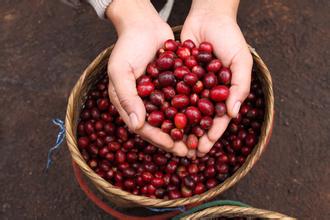
Coffee rookie entry-level learning coffee lesson 1 basic knowledge of coffee introduction to coffee varieties
Coffee belongs to the evergreen shrub of the genus Rubiaceae, which is centered in the tropics. There are about 6000 species of Rubiaceae belonging to 500 genera. Coffee has always been thought to have certain effects, such as strengthening the stomach, waking up the brain, stopping bleeding, dissipating heat, strengthening the body, and so on. The more famous Rubiaceae plant is Gardenia jasminoides, whose fruit was dried and used as medicinal material a long time ago. The three native species of coffee
2016-02-17 Coffee rookie introduction learning one lesson fundamentals knowledge learning variety coffee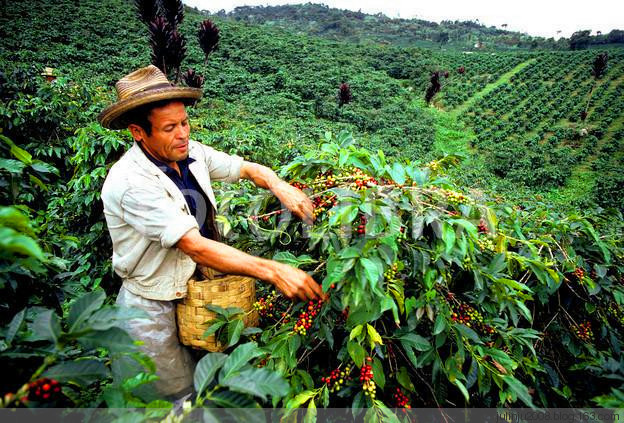
Iron pickup or bourbon? Iron pickup coffee bean iron pickup coffee price Bali, Indonesia
Iron pickup "Typica" iron pickup, the name sounds majestic and powerful, but in fact it is not so strong. It has a weak physique, poor disease resistance, easy to catch rust leaf disease, and produces less fruit. It is one of the oldest native varieties in Ethiopia, and many Arabica are derived from iron pickups! The parietal leaf of the iron pickup is bronzed, and the bean grain is large, pointed, oval or thin.
2016-04-22 Pickup or bourbon coffee beans price Indonesia Bali pickup Ty
The basic knowledge of coffee beans the origin of coffee coffee practice
The origin of Arabica species is the Abyssinia Plateau of Ethiopia (now the Ethiopian Plateau). In the early days, it was mainly eaten as medicine (Islamic couples used it as a secret medicine to cure body and mind or to awaken the brain). It developed the habit of baking and drinking in the 13th century and was introduced into Europe through the Arab region in the 16th century. It has become a favorite drink all over the world.
2016-05-27 Coffee beans basic knowledge coffee origin practice rabbi species Ethiopia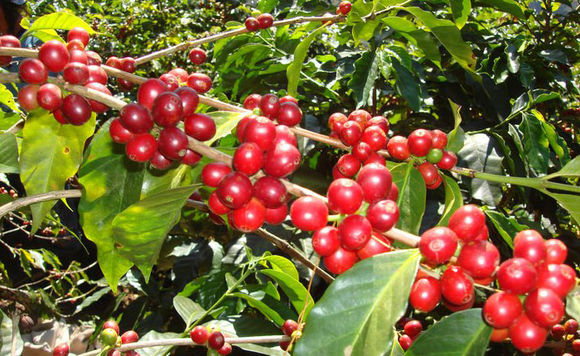
Is it Robusta or Arabica? Coffee bean variety Panamanian Boguit Rosa content 3
Iron pickup "Typica" iron pickup, the name sounds majestic and powerful, but in fact it is not so strong. It has a weak physique, poor disease resistance, easy to catch rust leaf disease, and produces less fruit. It is one of the oldest native varieties in Ethiopia, and many Arabica are derived from iron pickups! The parietal leaf of the iron pickup is bronzed, and the bean grain is large, pointed, oval or thin.
2016-04-22 Robes Booth or Rabbi Card seed Coffee Bean Variety Panama Pokui
Look at the big world of coffee beans. Highland coffee is superior.
The Buddha said, one flower, one world, one leaf, one Bodhi. Replaced with a coffee bean, still the same. Looking at this pure black liquid, it took a year of growth, harvesting, production, baking, grinding, extraction, and finally condensed into that mellow taste. It is like all the things that have been polished by time and hands, such as red wine, such as jade, in the small
2015-09-10 Look coffee beans the big world highlands coffee that is superior.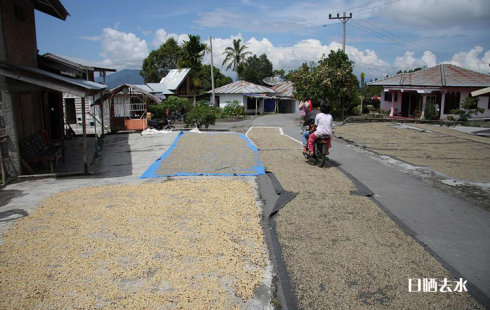
Iron pickup or bourbon? Iron pickup coffee beans iron pickup coffee beans price Guatemalan coffee beans roast
Iron pickup "Typica" iron pickup, the name sounds majestic and powerful, but in fact it is not so strong. It has a weak physique, poor disease resistance, easy to catch rust leaf disease, and produces less fruit. It is one of the oldest native varieties in Ethiopia, and many Arabica are derived from iron pickups! The parietal leaf of the iron pickup is bronzed, and the bean grain is large, pointed, oval or thin.
2016-04-22 Pickup or bourbon coffee beans price Guatemala pickup Typica
Coffee basics Arabica Coffee Tree
One of the most important coffee trees in the world. Arabica species (scientific name Coffee Arabica). The origin of Arabica species is Ethiopia's Abyssinia Plateau (present-day Ethiopian Plateau). In the early days, it was mainly used as medicine, and the habit of baking and drinking was developed in the 13th century. it was introduced into Europe through the Arab world in the 16th century.
2014-11-05 Coffee knowledge coffee basics Arabica coffee trees
The three primary species of Ethiopian coffee
About 65% of coffee circulating in the world market is Arabica: according to ICO (International Coffee Organization) statistics, excluding the domestic transactions of coffee producing countries, about 65% of coffee circulating in the world market is Arabica and 35% is Robusta. Arabica is characterized by elongated and flattened particles, and Robusta coffee beans are rounded. But if you add a
2016-09-20 Ethiopia Coffee Big Three Origin Region Flavor Taste Introduction
Cultivation techniques of small-grain Coffee
Disease control: 1. Coffee rust is the main disease of coffee, the most harmful, the damaged plants, light reduced yield, heavy death. Coffee rust is mainly harmful to leaves and sometimes to young fruits and twigs. After the leaves were infected, many light yellow spots appeared at first and enlarged in the form of water stains, followed by orange-yellow powdery spores on the back of the leaves, and there was a light green halo around the disease spots, and the disease spots in the later stage.
2014-07-09 Small-grain coffee cultivation coffee beans Yunnan small-grain coffee beans
Flavor and taste of Arabica Coffee Manor Coffee beans from Bali, Indonesia
Arabica coffee is one of the most important coffee trees in the world. Arabica species (scientific name Coffee Arabica). The origin of Arabica species is Ethiopia's Abyssinia Plateau (present-day Ethiopian Plateau). In the early days, it was mainly used as medicine, and the habit of baking and drinking was developed in the 13th century. through Arabia in the 16th century
2016-07-21 Rabbi Coffee Manor producing area Flavor Taste introduction Indonesia Bali
Indonesian Coffee Arabica Coffee Flavor introduces the characteristics of Indonesian Coffee
Arabica coffee trees grow between 900m and 2000 m above sea level; they are hardy, and the suitable growth temperature is 1524 ℃; they need more humidity, and the annual rainfall is not less than 1500 ml. At the same time, they also require higher cultivation techniques and conditions. Arabica coffee beans are mainly grown in South America (except Argentina and parts of Brazil), Central American countries and Africa.
2016-08-03 Indonesia coffee rabbi manor producing area flavor taste introduction characteristics
Arabica Coffee, the World's most wanted Coffee Variety, Arabica Coffee Manor
One of the most important coffee trees in the world. Arabica species (scientific name Coffee Arabica). The origin of Arabica species is Ethiopia's Abyssinia Plateau (present-day Ethiopian Plateau). In the early days, it was mainly used as medicine, and in the 13th century it developed the habit of baking and drinking. It was introduced into Europe through the Arab world in the 16th century.
2016-07-19 World want Coffee Variety Rabbi introduction Manor Lord